Key Results

6
Acquisitions Brought Under One Brand Within 12 Months
independent mom-and-pop wine storage businesses
Zero→PE-Backed
Funding
a roll-up engine with a seven-year horizon
Year 1
Profitability
Acquired
Profitable Exit
by UOVO in 2024 — years ahead of the seven-year plan

This Case Study Answers

  • How do you turn a roll-up of local businesses into one brand that’s worth a higher multiple?
  • How do you integrate acquisitions without losing their customers?
  • How do you grow revenue per location after the acquisition?
  • How do you build a brand and operating system that scales with every acquisition?

What Happened

The Challenge

Vino Vault started with no funding and a private-equity thesis with a seven-year horizon: acquire mom-and-pop wine storage businesses that had loyal customers and recurring revenue, but were cash-poor or barely breaking even, and turn them into a profitable, modern chain of premium wine storage facilities under one new brand.

Every acquisition was different — its own name, website, facility and way of doing things, and many were run-down. The company needed a premium identity that collectors would trust with irreplaceable wine, a way to bring each business into it without losing customers, and a go-to-market plan that served all three parts of the business: more acquisitions, auction and brokerage sales, and growth in revenue per facility.
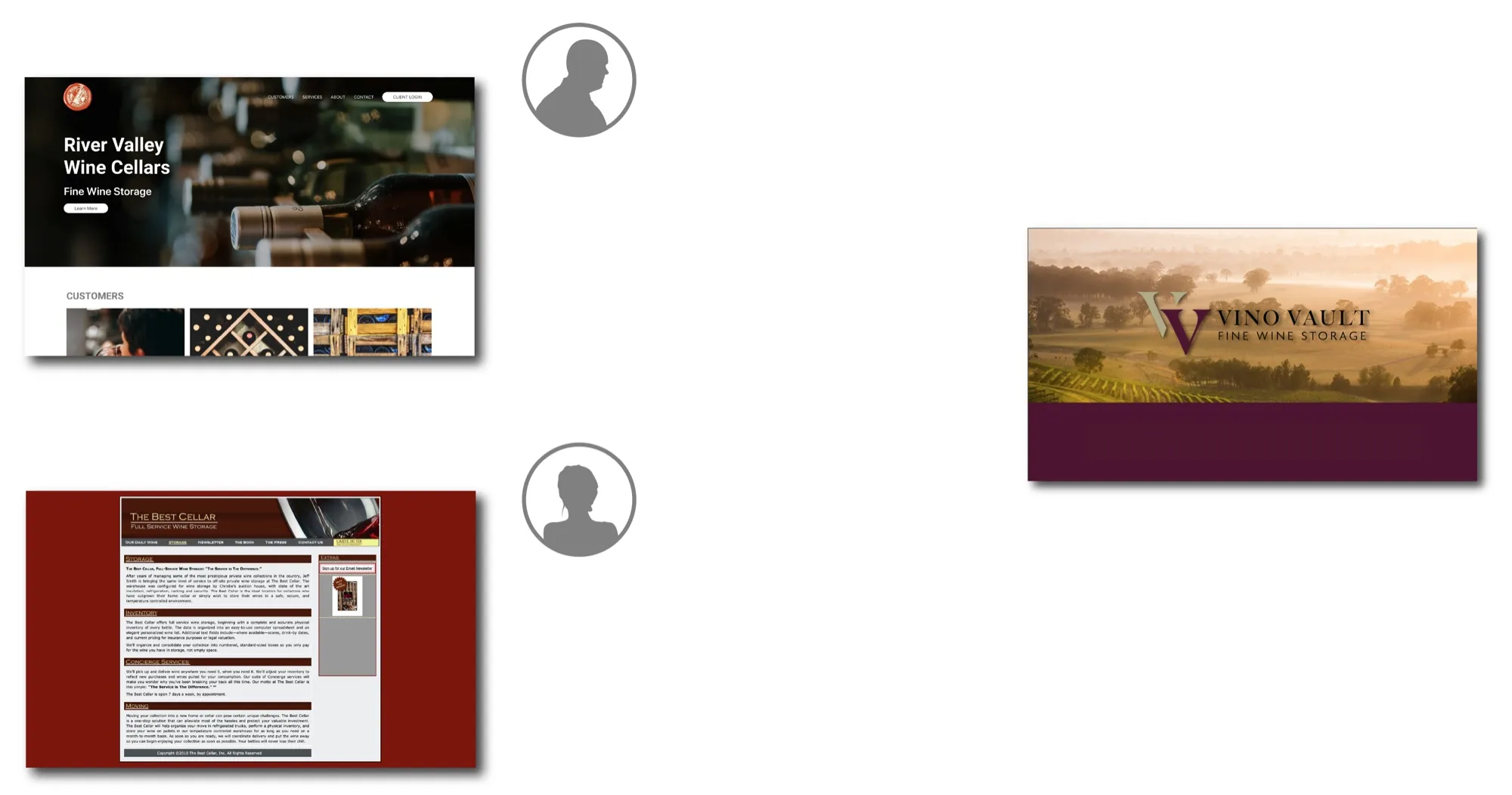
Independent wine-storage brands such as River Valley Wine Cellars and The Best Cellar alongside the new Vino Vault brand
From independent cellars to one brand

Brand Architecture: How Prominent Should Vino Vault Be?

The problem

Replacing an acquired business’s name risks alienating the collectors who chose it. But keeping every local name means the roll-up never becomes worth more than its parts.

The solution

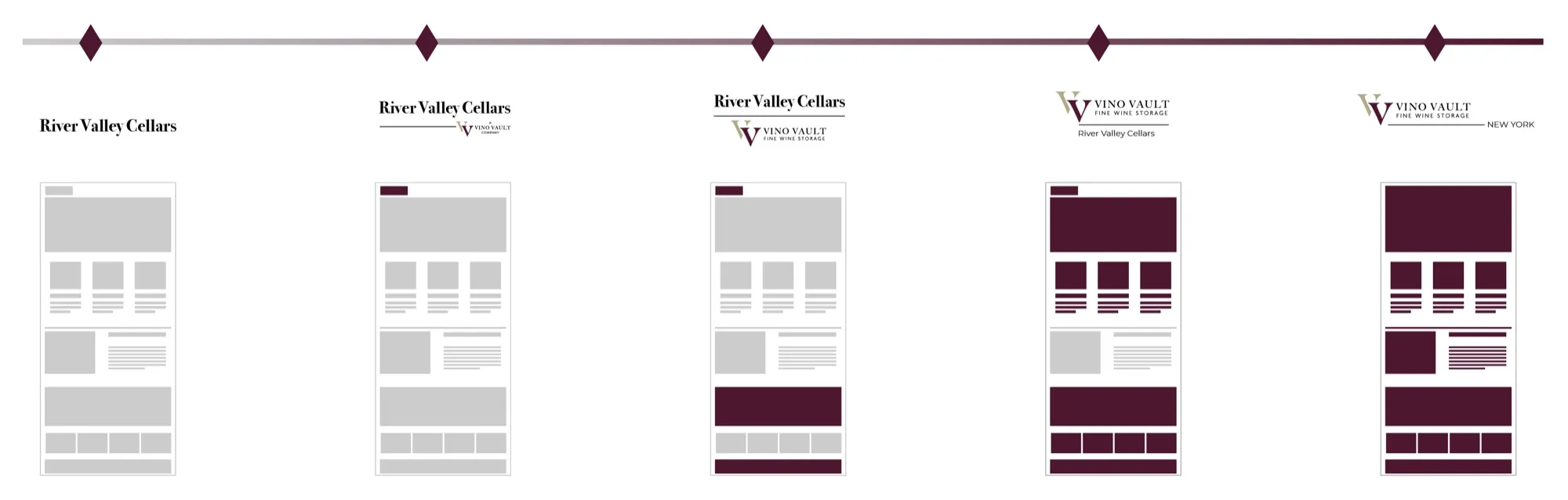
We mapped the full range of options for the executive team to evaluate. At one end, each business keeps its own identity as a white label. At the other, Vino Vault absorbs the brand completely, leaving just Vino Vault and the city. In between are co-branded variations with the Vino Vault brand playing a smaller or larger role. Seeing them side by side made the trade-off between local trust and national brand value a clear, deliberate decision.

Brand exploration from a fully white-labeled local brand on the left to Vino Vault plus city on the right, with co-branded options between
Brand exploration: from full white label to Vino Vault + city

Positioning: Store, Manage, Monetize

Research and segmentation separated private collectors who want white-glove concierge service from locker clients who want secure space nearby, and from commercial clients — distributors, restaurants and direct-to-consumer retailers. We mapped the moments that trigger a search for storage: a move or renovation, an estate change, or simply running out of room in the home cellar.

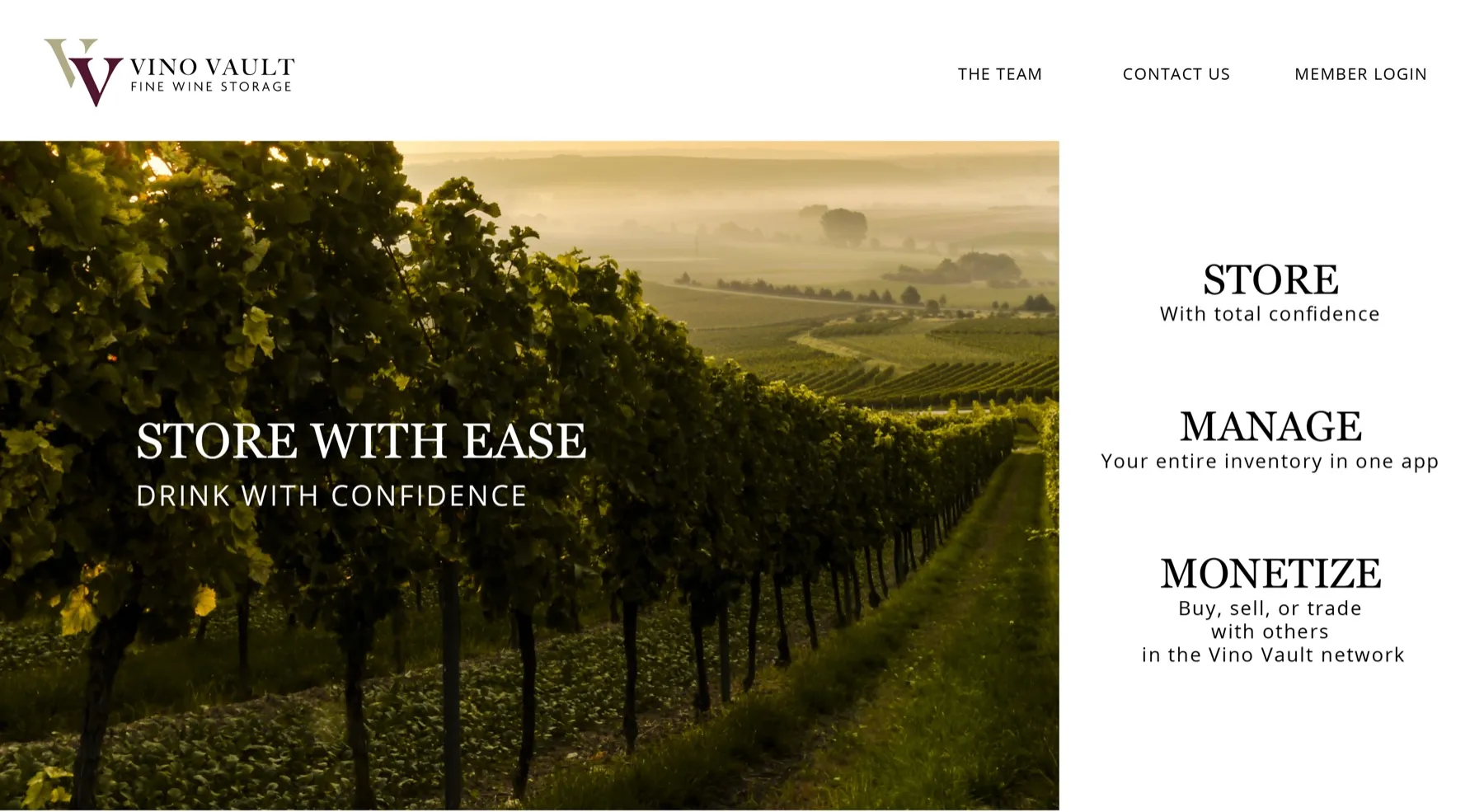
The brand promise brought it together: store with total confidence, manage your entire inventory in one app, and buy, sell or trade within the Vino Vault network.

Vino Vault website concept: Store with ease, drink with confidence — store, manage, monetize
A new experience for wine collectors (website)

Retrofitting Six Local Businesses Into One National Premium Chain

A new name and logo weren’t enough: six very different, often run-down businesses had to look, feel and behave like a premium nationwide chain. We built a brand system that every facility and touchpoint could follow, and defined the service standard behind it — premium customer service, white-glove concierge offerings and a membership-style experience for collectors.

The result was consistent from a collector’s first website visit to the moment their wine was delivered, whichever city they stored it in.

Product & growth

From Storage to Services

The Wine Owners App

The key innovation was the network itself. Every member’s wine was received, inventoried and stored by Vino Vault, so collectors could buy and sell bottles with other members knowing exactly how each one had been kept — provenance an open marketplace can’t promise. Being a member meant joining a trusted circle of collectors, with concierge services like appraisal, portfolio analysis and auction sales a tap away.

As product manager and UX lead, I defined the requirements, user stories and design for the app, and sourced and hired the VP of Engineering. Members could see their whole cellar and its value, buy and sell within the network, and request deliveries and services. Behind the scenes, inventory and marketplace data flowed into the CRM, so the team could spot collections ready for sale and offer the right service at the right time.

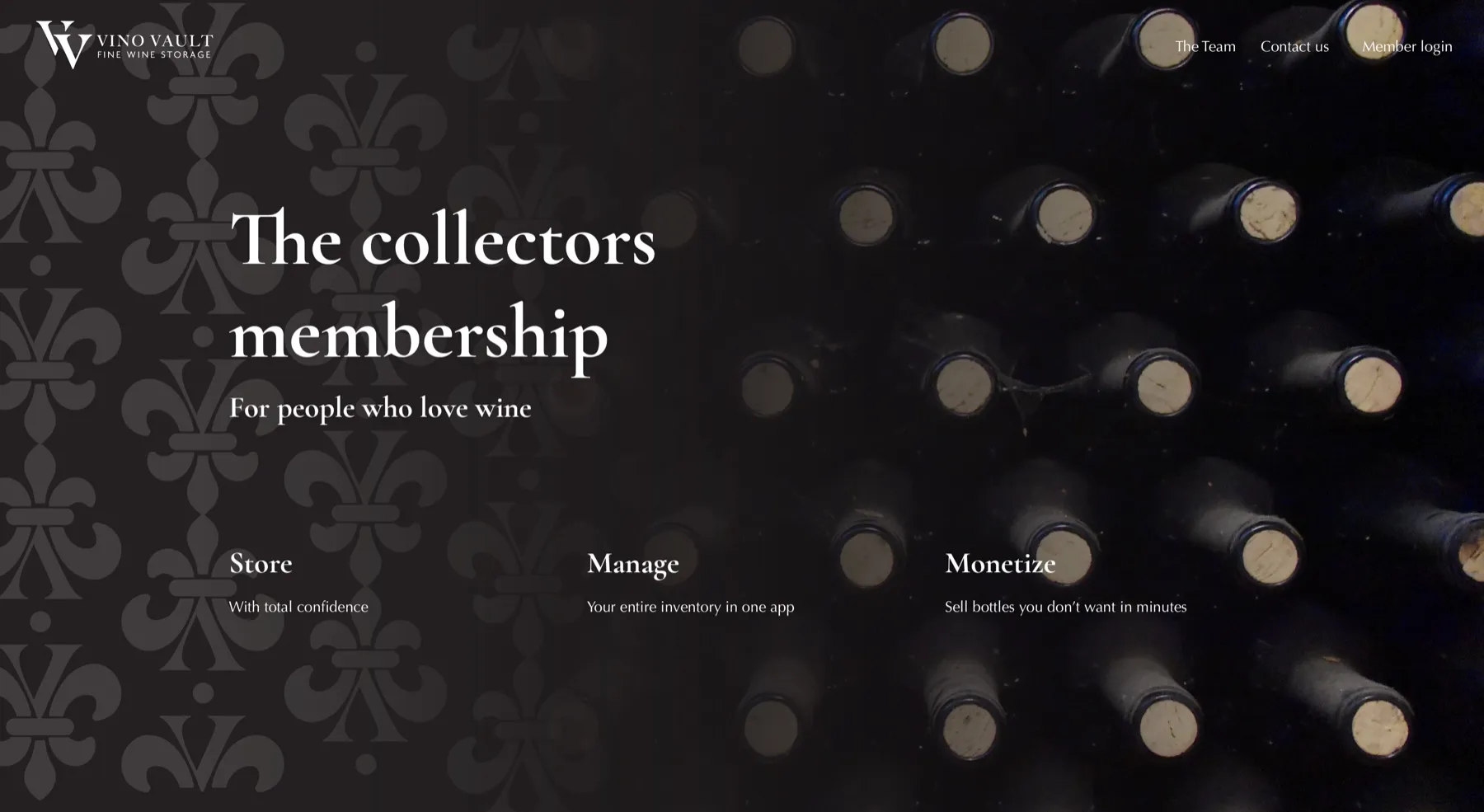
Vino Vault website concept: The collectors membership — store, manage, and monetize by selling bottles you don’t want in minutes
The collectors membership: store, manage, monetize
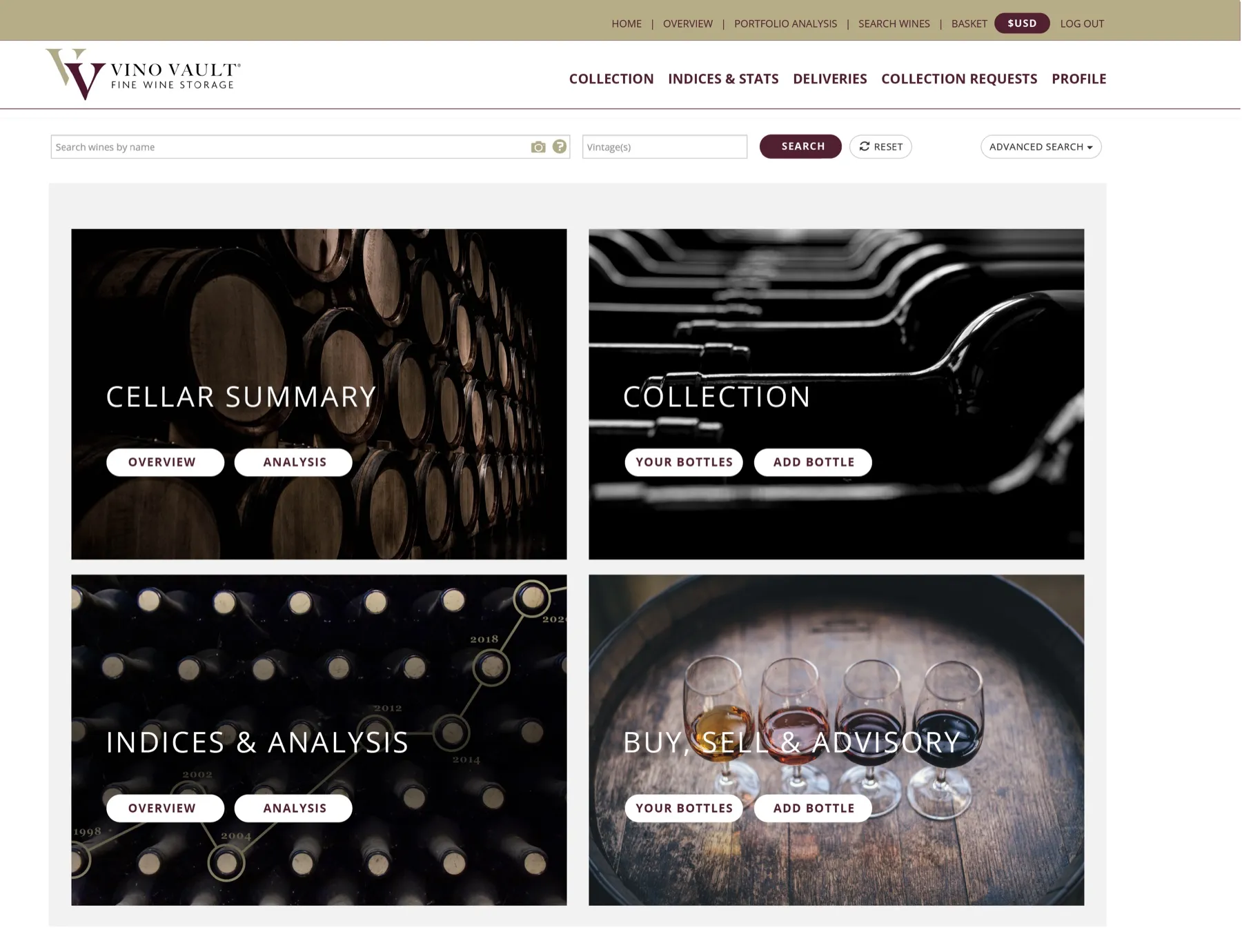
Wine Owners app home screen with cellar summary, collection, indices and buy, sell and advisory sections
App home: buy, sell & advisory built in
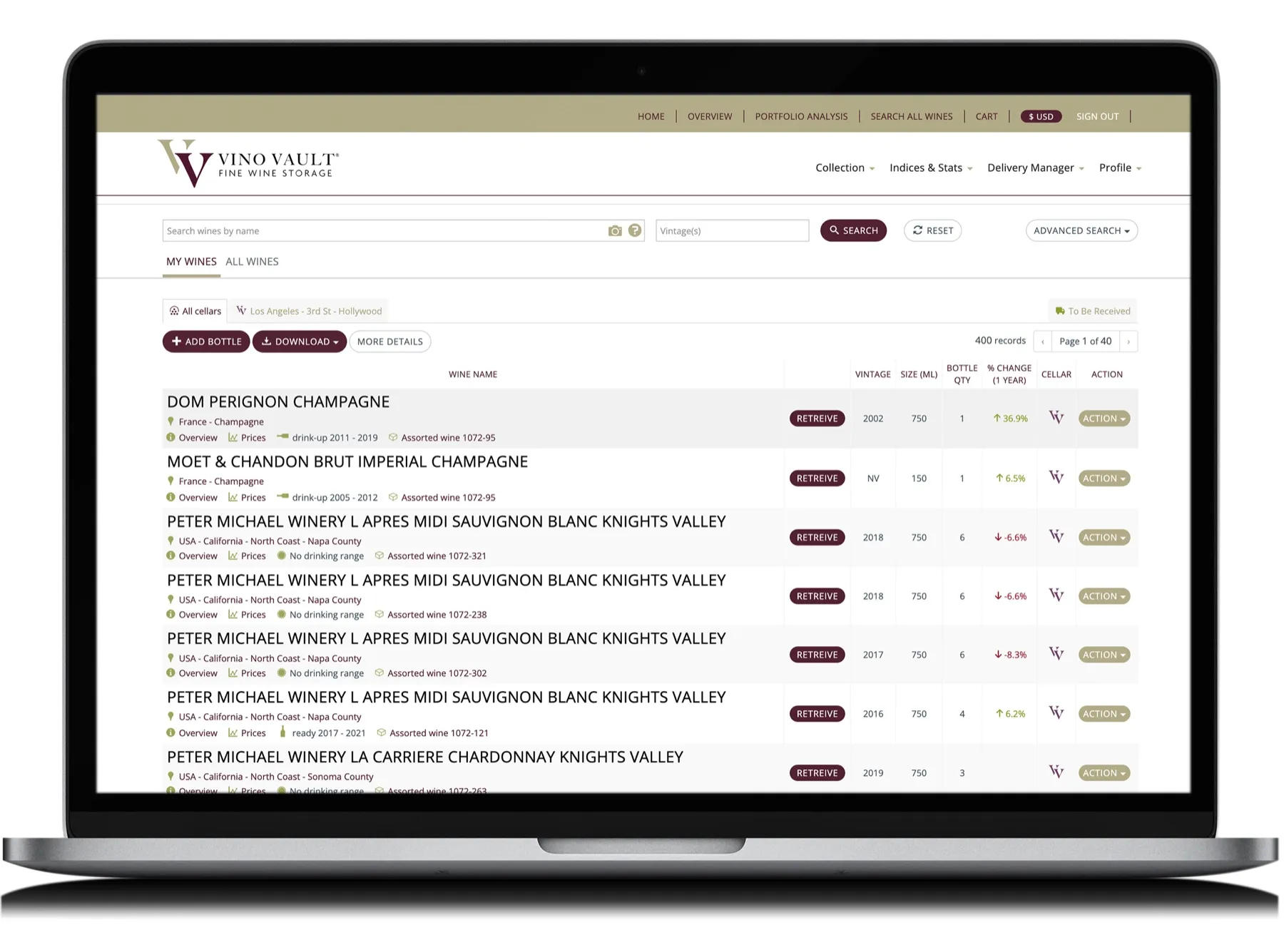
Wine Owners app collection list on a laptop, with vintage, quantity and value change for each wine
Collection view
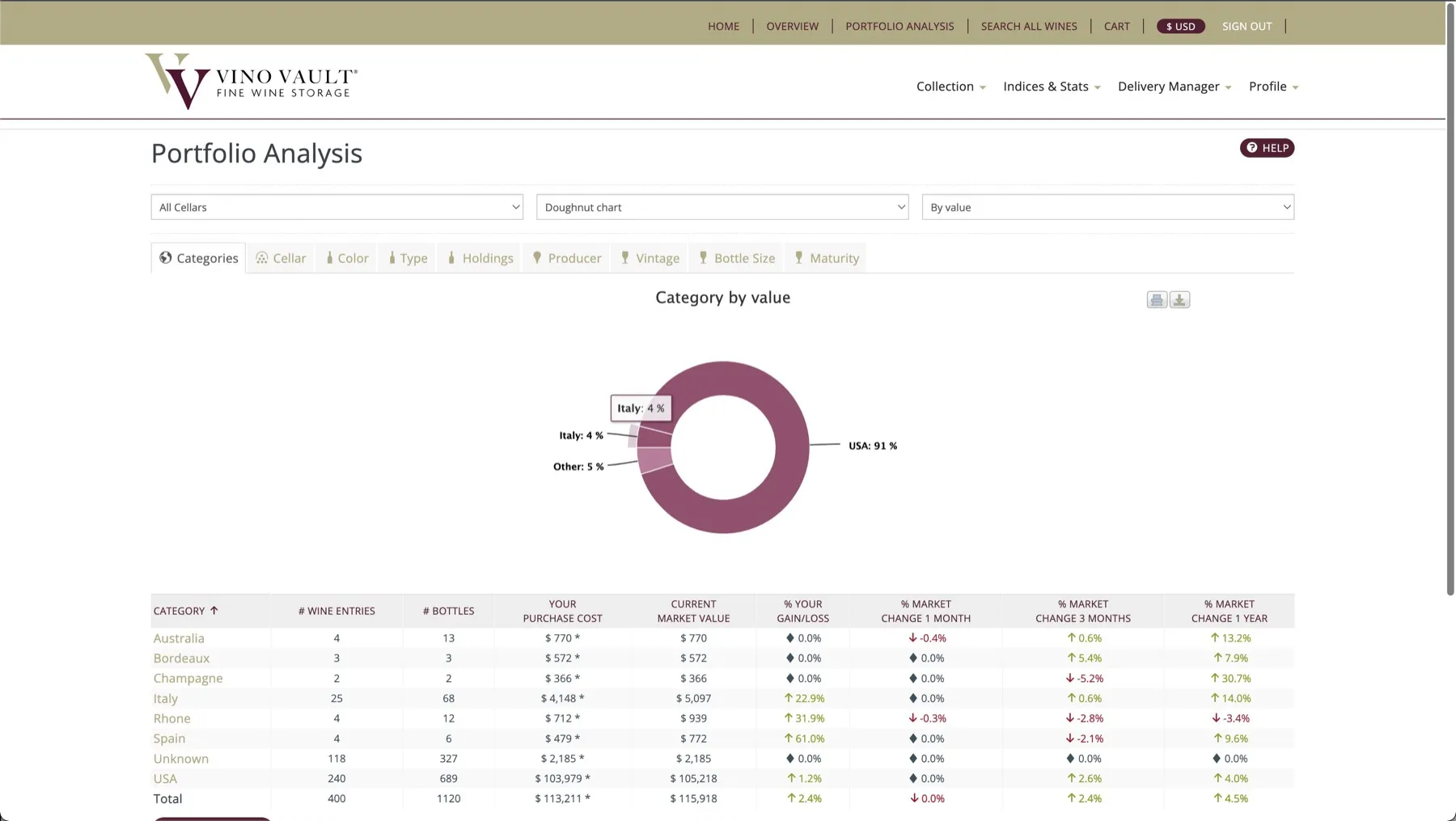
Vino Vault portfolio analysis screen showing collection value by category with market changes
Portfolio analysis & valuation

A Go-to-Market Engine for All Three Legs

Every marketing activity was tied to one of the company’s growth drivers. For acquisitions: trade PR, owner stories and a simple, transparent process that made sellers want to call us first. For auctions: expert-led content and collection reports that turned stored wine into sales. For growth per facility: brochures, email campaigns and in-app offers that converted locker clients into full-service clients.

I built the lead-generation and PR team, processes and tech stack for performance marketing and CRM sales conversion. Within 12 months Vino Vault had brought six acquisitions under one brand, and it was profitable in its first year.

The Exit

The roll-up was planned over seven years. It exited years early: in 2024 UOVO, the storage and services company for art, fashion and wine, acquired Vino Vault to expand UOVO Wine nationally — a profitable exit for its private-equity backers. I had moved on by then, but the brand system, member experience and app we built were still how the business ran.