Key Results

Loss→$1B+
Franchise Licensing Revenue
from a money-losing program to more than $1 billion by Harry Potter 4
1 Year
Complete Brand Turnaround
the entire franchise brand rebuilt in the window between Harry Potter 2 and the worldwide launch of Harry Potter 3
#1
Most Lucrative Licensed Property in Warner Bros. History
not just of its era — in the century-old studio’s entire history
8-Figure
Single Retail Exclusive
tens of millions of dollars from one teen line at Hot Topic, on top of the core program

This Case Study Answers

  • How do you turn around a famous brand that’s underperforming?
  • How do you fix a money-losing brand in under a year?
  • How do you find out why customers stopped buying?
  • How do you win back retail partners and licensees who want out?

What Happened

The Challenge

When Harry Potter 1 and 2 opened, they swept box-office records — Chamber of Secrets was the second-highest-grossing film in Warner Bros.’ history at the time. Kids lined up around the block whenever a new book came out.

The only surprise was that the licensing program for both films had failed. Licensing is a key revenue stream for any kids’ property, and Potter badly underperformed. The studio had to liquidate unsold Harry Potter 2 merchandise. Licensees wanted out of multi-picture contracts, relationships with the author and producer were at risk, and a program that cost more than $1 million to develop was losing money. The creative team was replaced.

Linda Salvati, a group creative director who had launched Winnie the Pooh for Disney and Power Rangers for Saban, was hired as creative director for the whole program, and she hired me. We split the work as partners: Linda led the product lines themselves — the art and product style guides for every category — and I led how the brand sold at market: packaging, point of purchase and the retail experience. We had one year, until Harry Potter 3 opened in theaters worldwide, to relaunch the franchise brand.
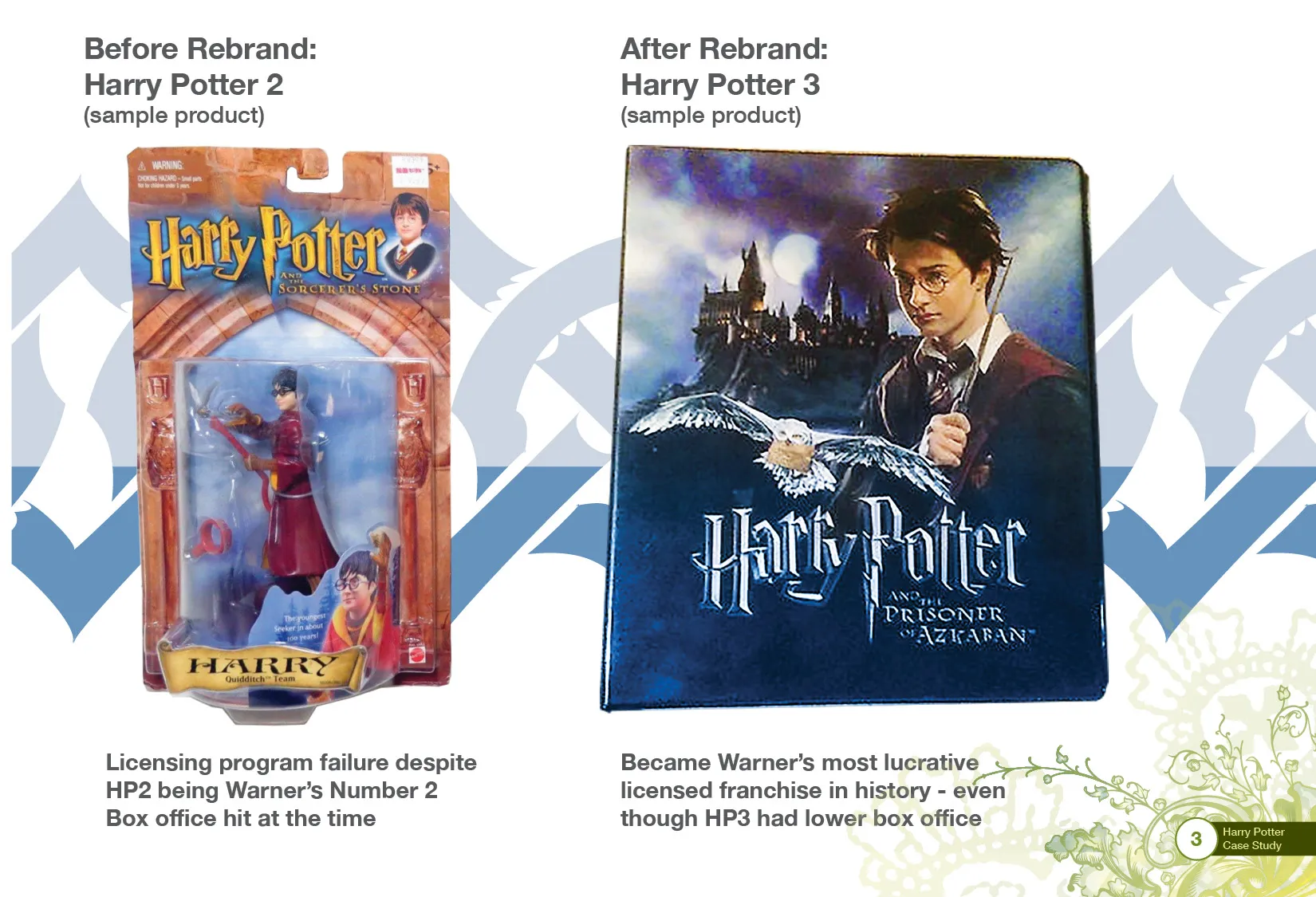
Before and after: a Harry Potter 2 action figure in storybook-style packaging next to a Harry Potter 3 binder with dramatic film photography
Before (Harry Potter 2) and after (Harry Potter 3)

The Insight: Harry Potter Is an Action Hero

The problem

The licensed products had been designed to match the bestselling books: pastel illustrations and woodcut chapter art. The artwork was beautiful, but it lived squarely in the world of children’s book illustration.

The solution

Warner’s research with kids and parents told a different story. The kids we surveyed described Harry as an action hero — their action hero. Hogwarts wasn’t a whimsical castle in pastels; it was a magical, dangerous world of mystery and discovery, where all you could count on were your friends, a few mentors and your own abilities.

So the franchise became more dynamic, more realistic (but still magical) and more like an action movie. New photography put the insight on every package: Harry stopped smiling and started casting spells, and Hogwarts loomed out of moonlit fog. Linda moved apparel to edgier goth, rock and collegiate designs that positioned the brand for pre-teens rather than young children, and sold in an exclusive line for teens and young adults at Hot Topic that generated tens of millions of dollars on top of the core program. Our artists worked directly with the film’s producer so everything fit the vision of the upcoming movie.

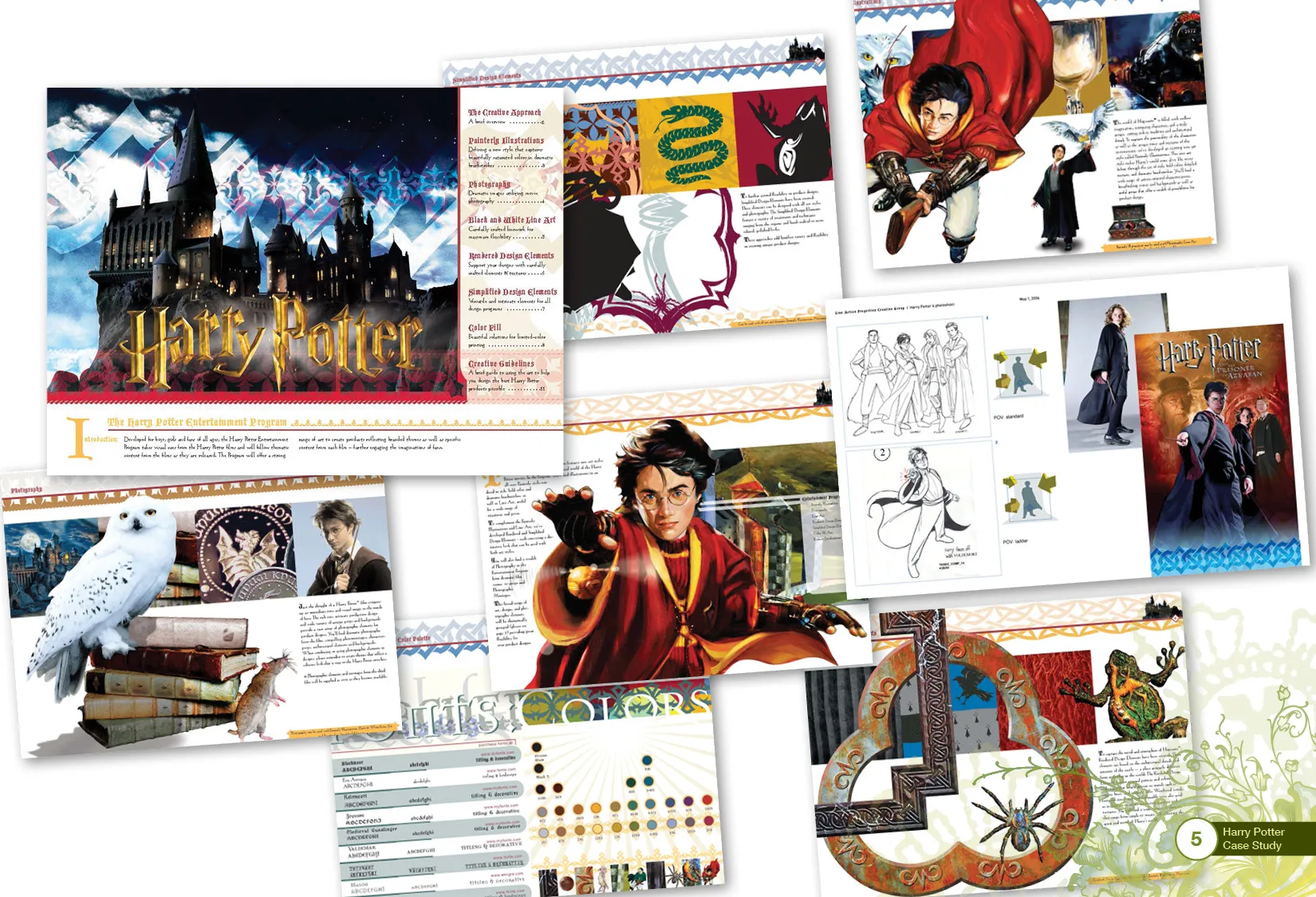
Spreads from the initial Harry Potter brand vision document, with Hogwarts, Harry in action, creatures and color palettes
The initial brand vision, used to align the studio, producers, licensees and retailers

Brand system

From Storybook to Blockbuster

Style Guides for Every Product, Package and Store

The new brand came to life in a family of style guides, assembled from the work of dozens of world-class artists and designers. Linda led the product style guides: art and design direction for every product category. I led the branding, packaging and retail experience style guides that defined how Harry Potter looked on the shelf and in the store. I led the in-house team and agency partners that built them, keeping every guide anchored to the same insight.

Together, the guides gave every licensee and retailer, from toys and games to apparel and publishing, one clear picture of what Harry Potter should look like, from the product itself to the box it came in and the aisle it sat in.

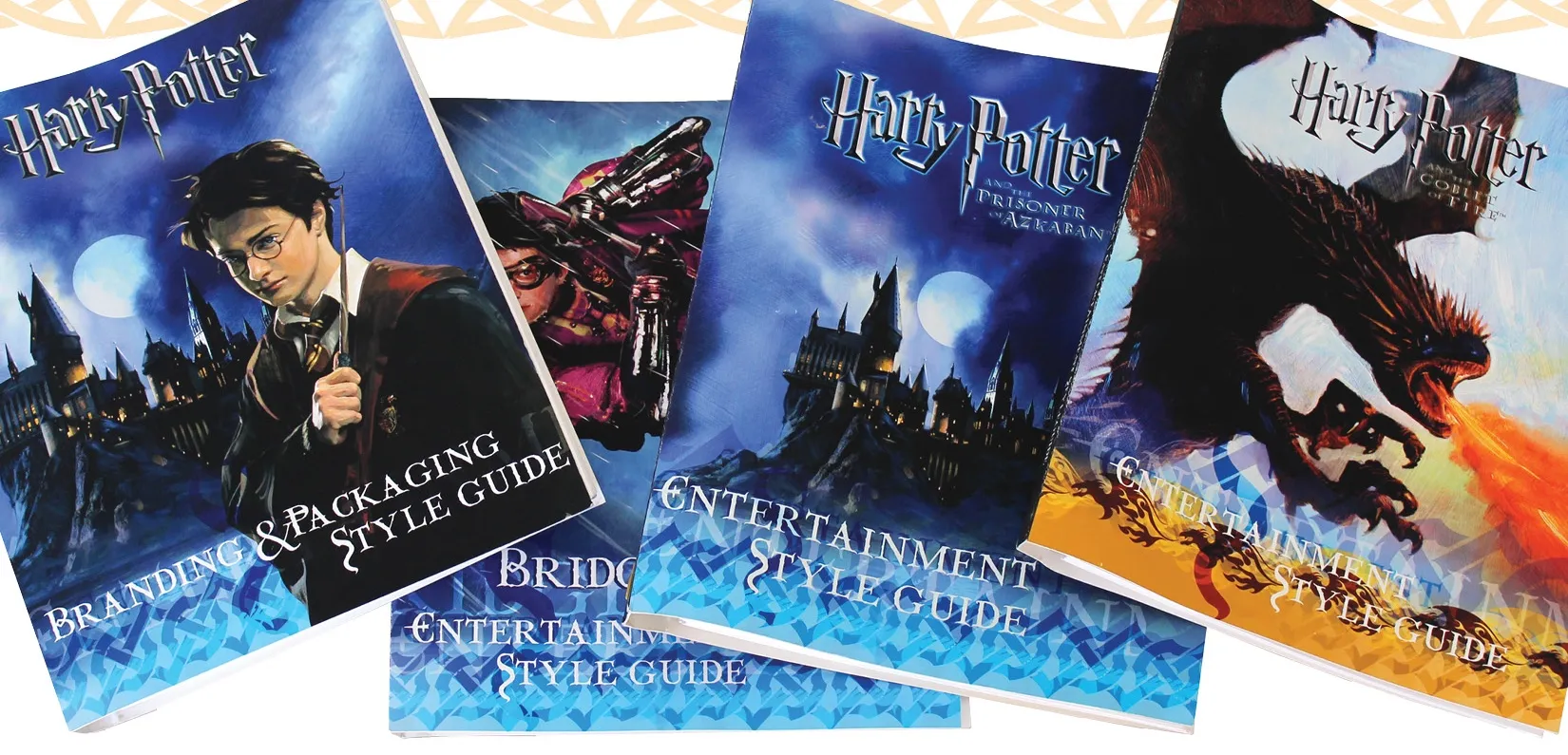
Harry Potter branding and packaging, bridge and entertainment style guides for Prisoner of Azkaban and Goblet of Fire
The franchise style guides
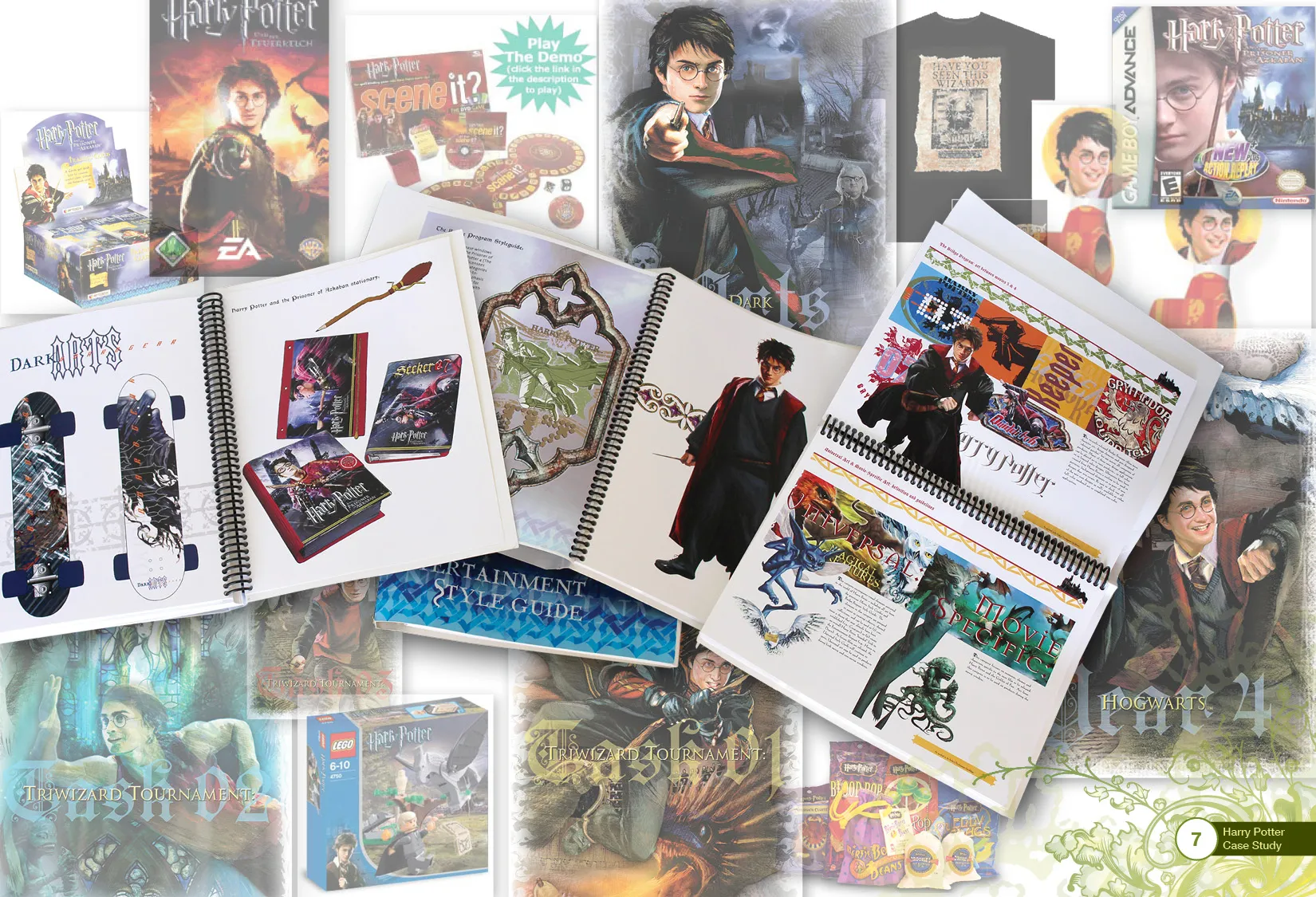
Open Harry Potter style guides surrounded by licensed products including games, LEGO sets and apparel
Core style guides and the products they shaped

Packaging and Retail That Worked Worldwide

This was my side of the partnership: the retail brand — packaging, point of purchase and in-store marketing. The Harry Potter 3 packaging guide distilled the brand into a scalable system that any licensee in any market could follow, so the brand looked the same on every shelf worldwide without the studio redoing the work.

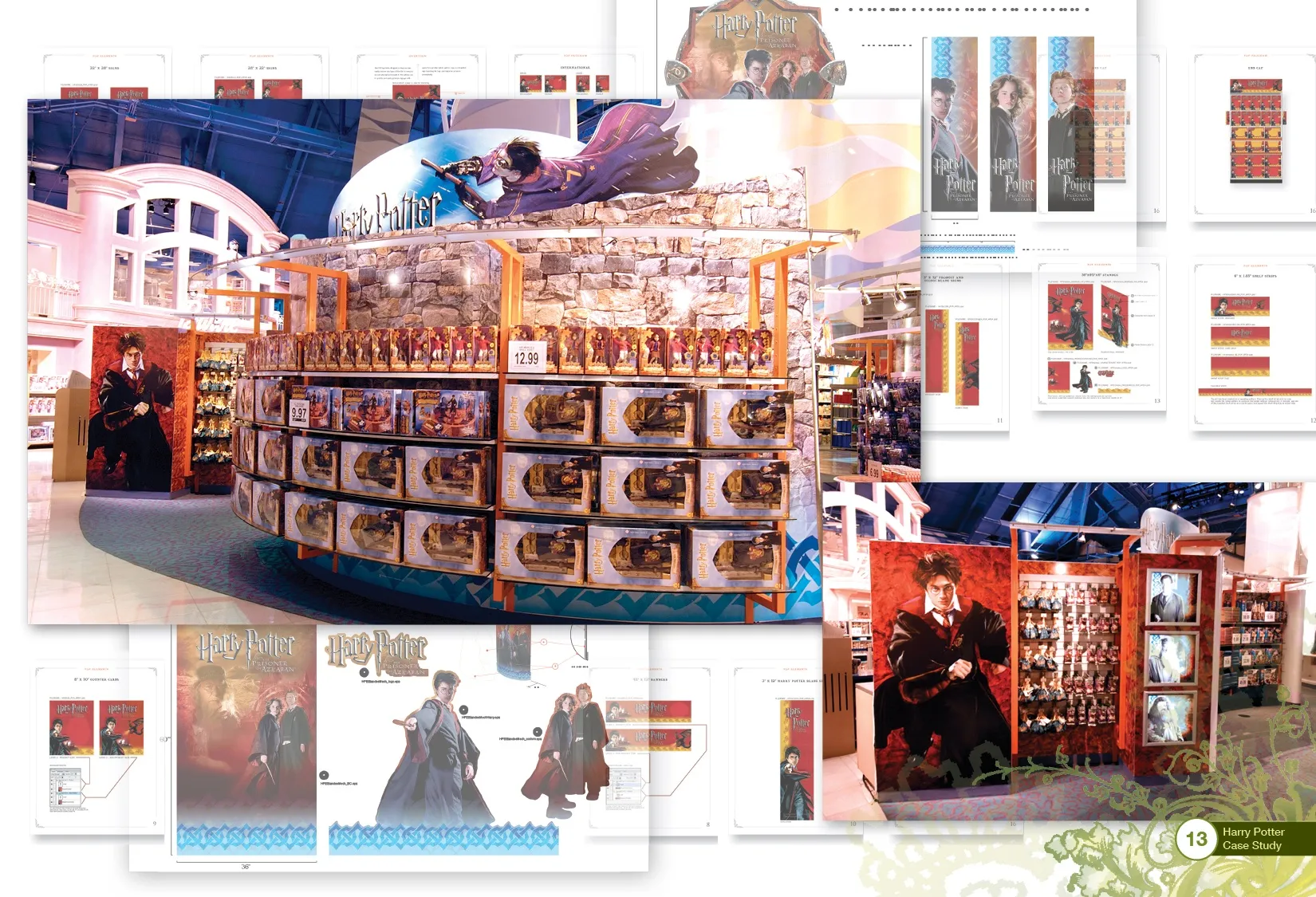
The retail guides adapted to every kind of space. The rebrand launched at Toys “R” Us in Times Square with signage and photography designed to capture the theatrical experience.

Harry Potter in-store display at Toys R Us Times Square with branded fixtures and character art
In-store launch at Toys “R” Us Times Square
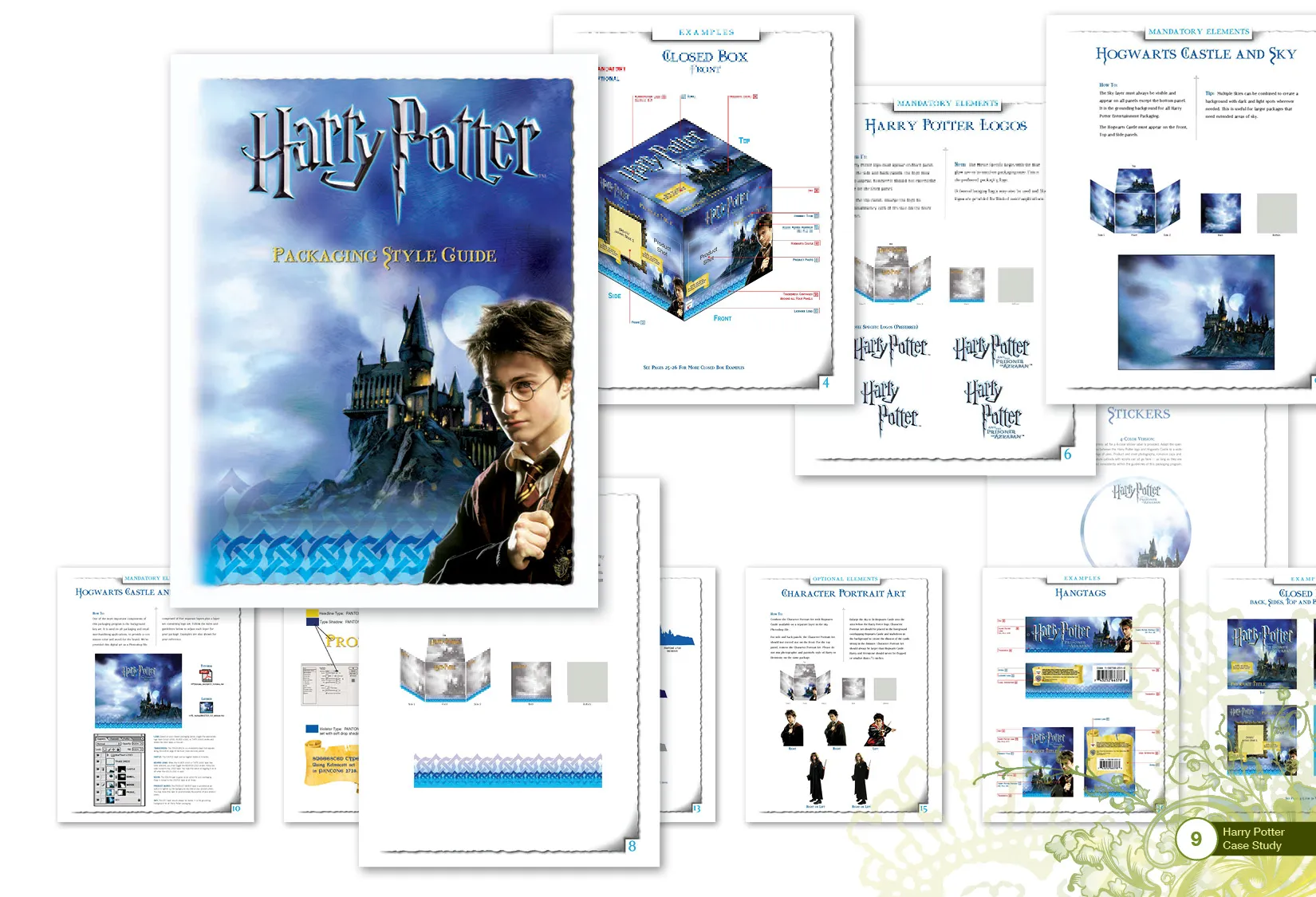
Harry Potter 3 packaging style guide cover and pages showing logos, Hogwarts sky art and box templates
Harry Potter 3 packaging style guide

Built to Repeat: Harry Potter 4

After Harry Potter 3, I turned the packaging and retail branding into a template that could be repeated for every film that followed. The trade dress and color could change with each movie while the system stayed the same, so each release felt new without rebuilding the brand.

Because the template carried over, new Goblet of Fire product could be cross-merchandised with Prisoner of Azkaban product still on the shelf — keeping sales going between releases.

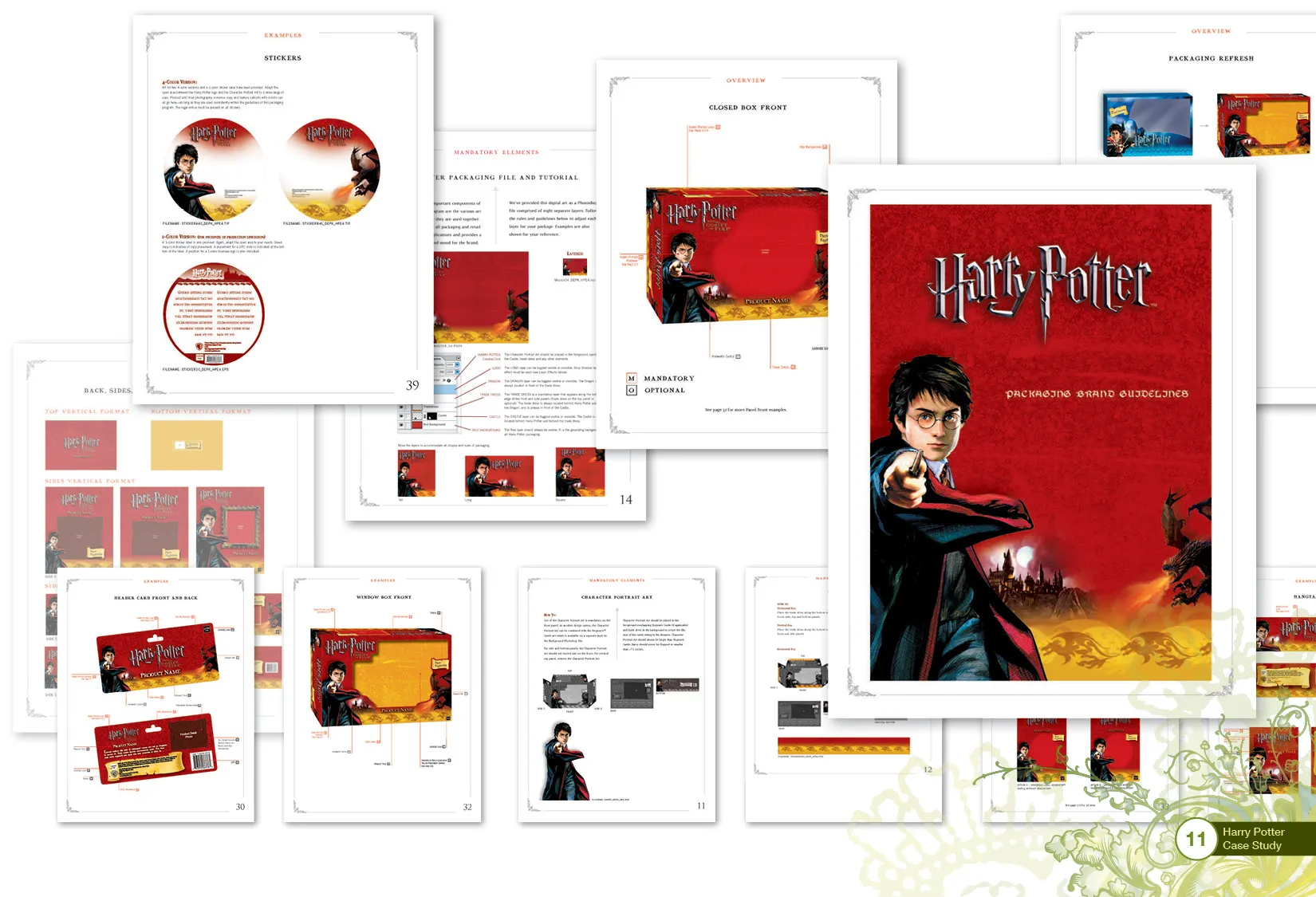
Harry Potter 4 packaging brand guidelines with a red trade dress, box templates and sticker examples
Harry Potter 4 packaging brand guidelines

The Result

Harry Potter 3 earned less at the box office than Harry Potter 2 — though it was still one of the top-grossing films of its time. But the rebranded licensing franchise took off, outselling every projection and becoming the most lucrative licensed property in Warner Bros.’ history.

By the release of Harry Potter 4, the franchise had generated more than $1 billion in licensing revenue. After Harry Potter 5, it had become the most lucrative movie licensing franchise in history.