Key Results

+14%
Growth
2016, in a retail category in steep decline
#1
Mall Operator Globally
by revenue
Experience It First
New Positioning
replacing “The Joy of Shopping”

This Case Study Answers

  • How do you reposition a brand in a declining category?
  • How do you give physical retail an edge over e-commerce?
  • How do you turn marketing tactics into a core value proposition?
  • How do you keep a brand consistent across hundreds of locations?

What Happened

The Challenge

Westfield is the largest mall operator in the world by revenue, holding some of the most valuable real estate in glamorous city centers across nearly every continent. But the CMO of its North America group faced a structural problem: today's consumer can order anything a mall sells from a phone app without leaving the couch.

The engagement began narrowly. We were hired to update Westfield's brand guidelines and style guide — the existing version was an enormous document with conflicting instructions, unclear use cases, and impractical marketing templates.

But the first questions we asked weren't about design. They were about positioning and messaging pillars. Before you can define the creative elements needed for clearer communication, you have to define what the brand should communicate, and to whom.
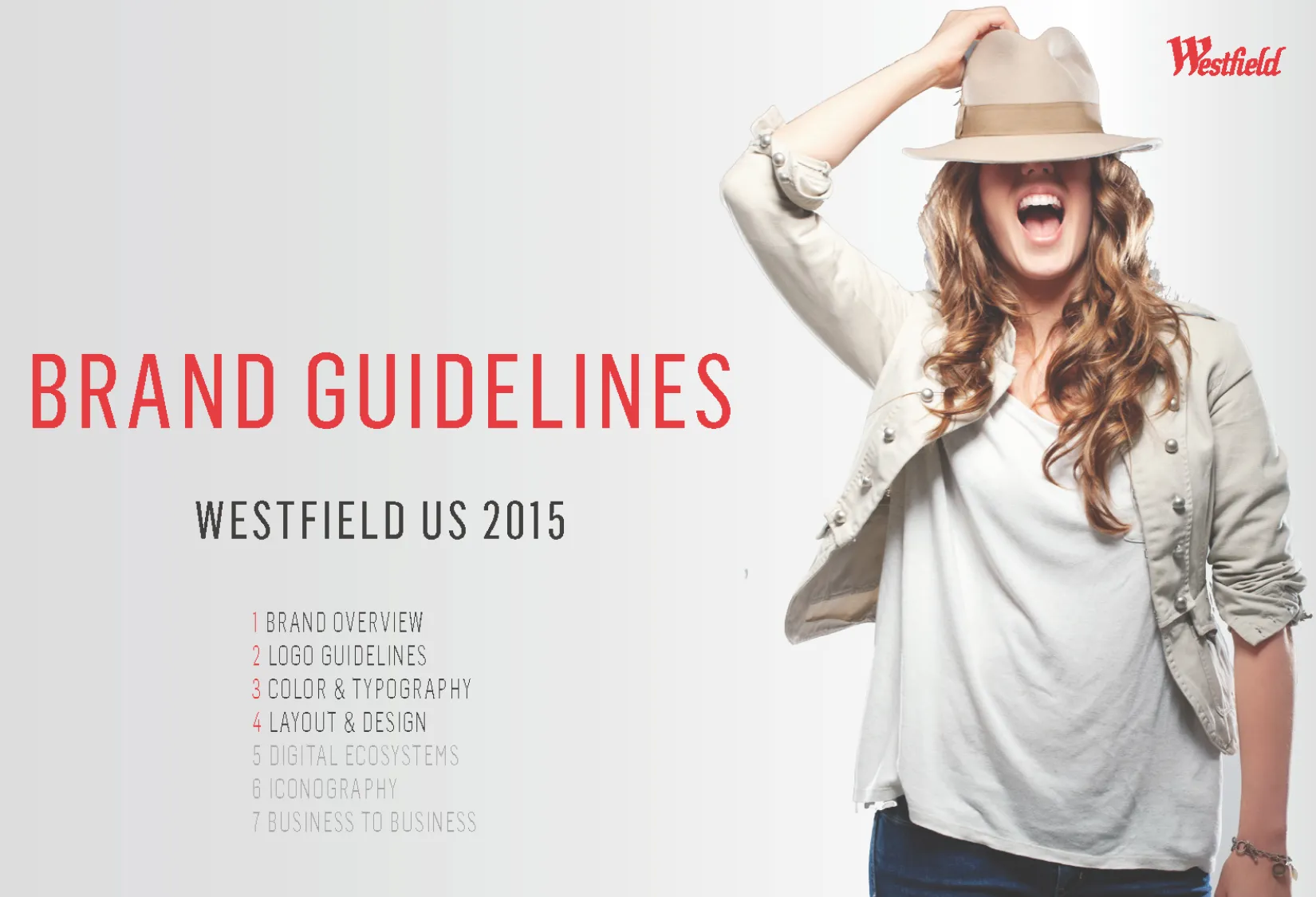
Westfield US 2015 brand guidelines cover

Positioning: Experience It First

The question that drove everything: what unique value does Westfield bring in an age when consumers no longer need to go to a mall to shop?

That led to an extended exploration with the CMO, using the Matli Positioning Methodology as the framework. The process crystallized the CMO's vision and produced the key insight — people go to Westfield centers as an entertainment destination, not strictly to shop.

The company had already been producing fashion shows, cooking demonstrations, wine and food tastings, movie nights and community outreach, but had treated them as grafted-on lead generation. In reality, that was the reason customers came. Entertainment wasn't a tactic. It was the core value proposition.

A Westfield center is a physical place where people of any generation can meet friends and family, and where anyone can find something fun to do, see or take part in. From movie theaters to makeup counters to story hours, it offers an experience impossible to duplicate on Amazon or in Walmart — and it's free. You can make a whole day of it, surrounded by your favorite stores.

In smaller markets the value was sharper still. Westfield brought the world's latest fashions, trends, films, books and occasionally even celebrities to your town in a way Facebook never could. You could see what people in New York or Paris were seeing, buy the same products, experience the same entertainment. A physical connection to the world.

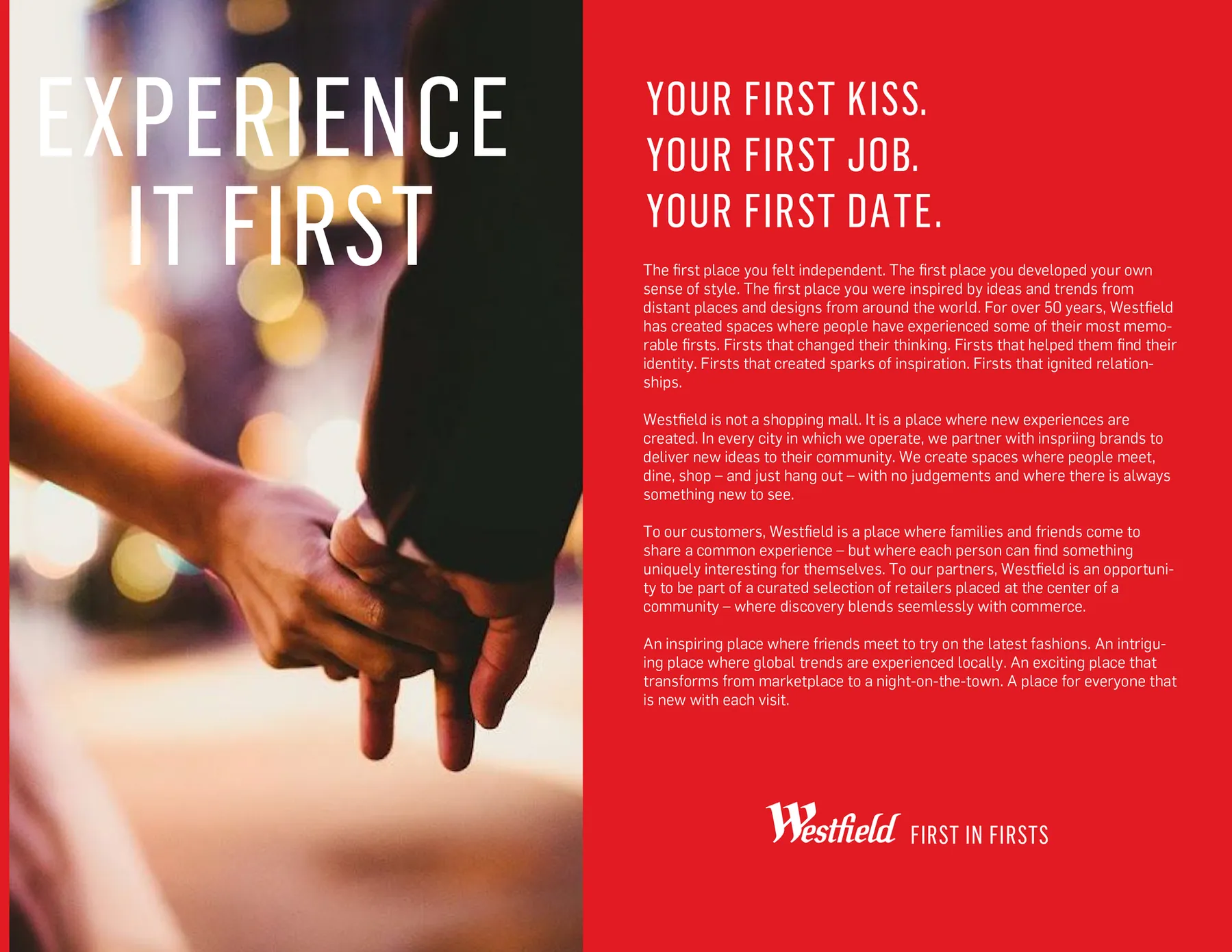
The positioning moved from "The Joy of Shopping" to "Experience It First."

Westfield Experience It First brand manifesto page

How Westfield Looks

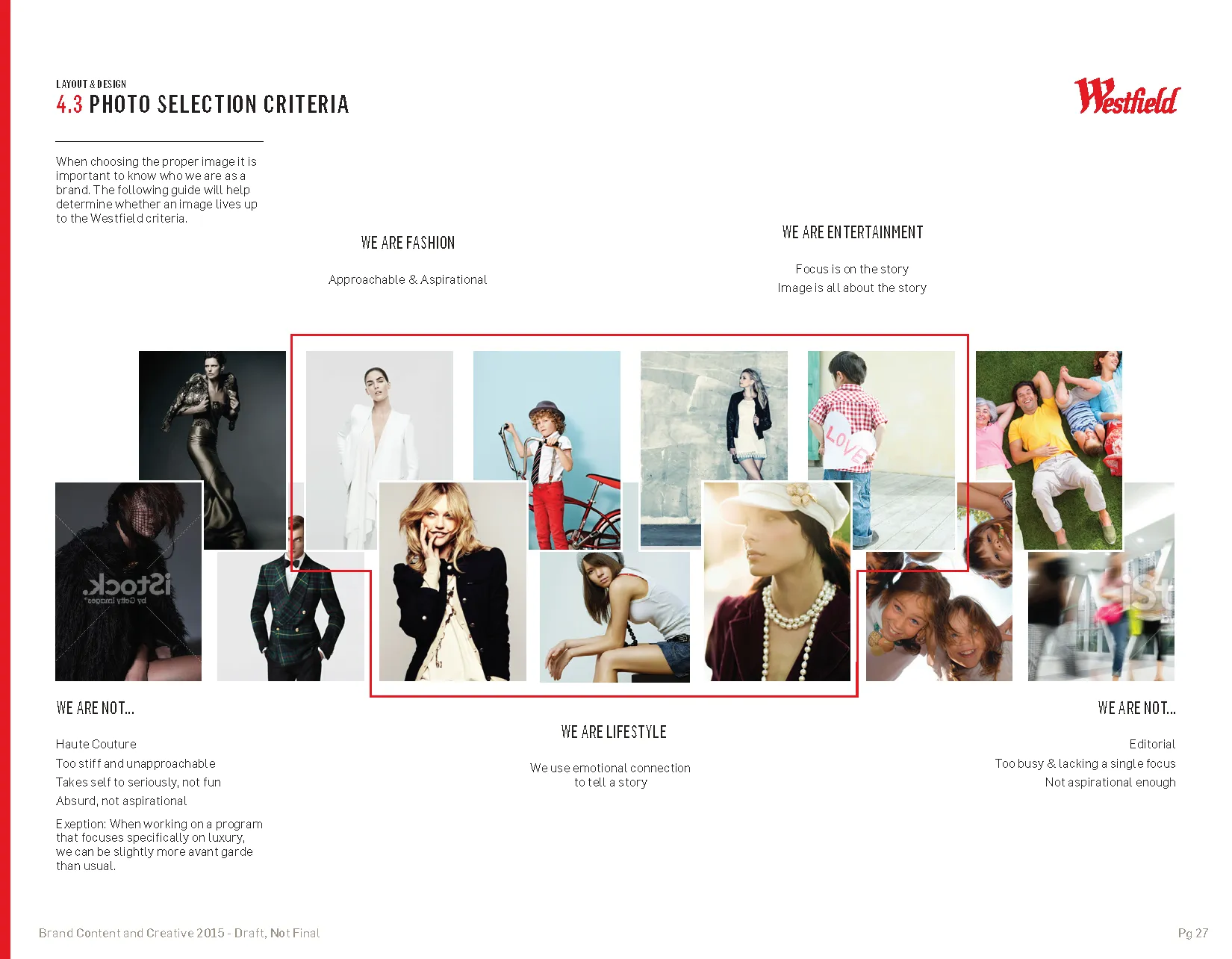
With positioning and messaging pillars defined, the work turned to codifying them into a visual and verbal system — what Westfield is and what it is not, how the brand looks, and the photo selection criteria separating fashion, entertainment and lifestyle imagery from everything off-brand.

Rather than a rulebook that only a trained designer could follow, the guidelines were written to be operated by anyone, with worked examples showing the reasoning behind each standard.

Westfield photo selection criteria showing fashion, entertainment and lifestyle imagery standards

Execution Highlights

Disciplines applied: brand positioning via the Matli Positioning Methodology, CMO-level strategic facilitation, messaging pillar development, brand manifesto writing, visual identity and photo direction, customer journey and channel mapping, and the design of a scalable marketing guideline system for a distributed, multi-tier retail organization.

When to Say What to Whom

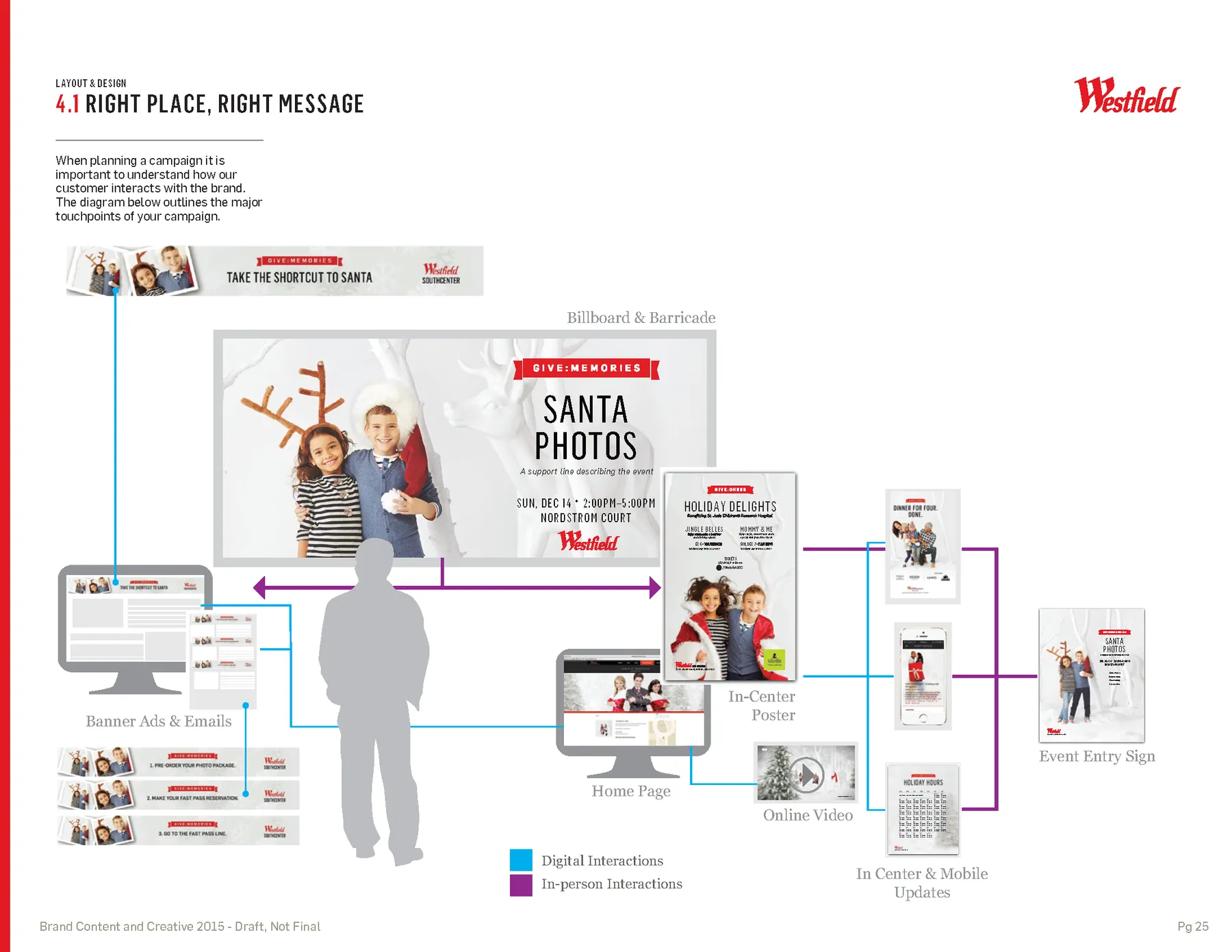
The platform mapped campaign messaging across the full customer journey — the right message in the right place, running from billboards and banner ads through in-center posters, online video, home page and event entry.

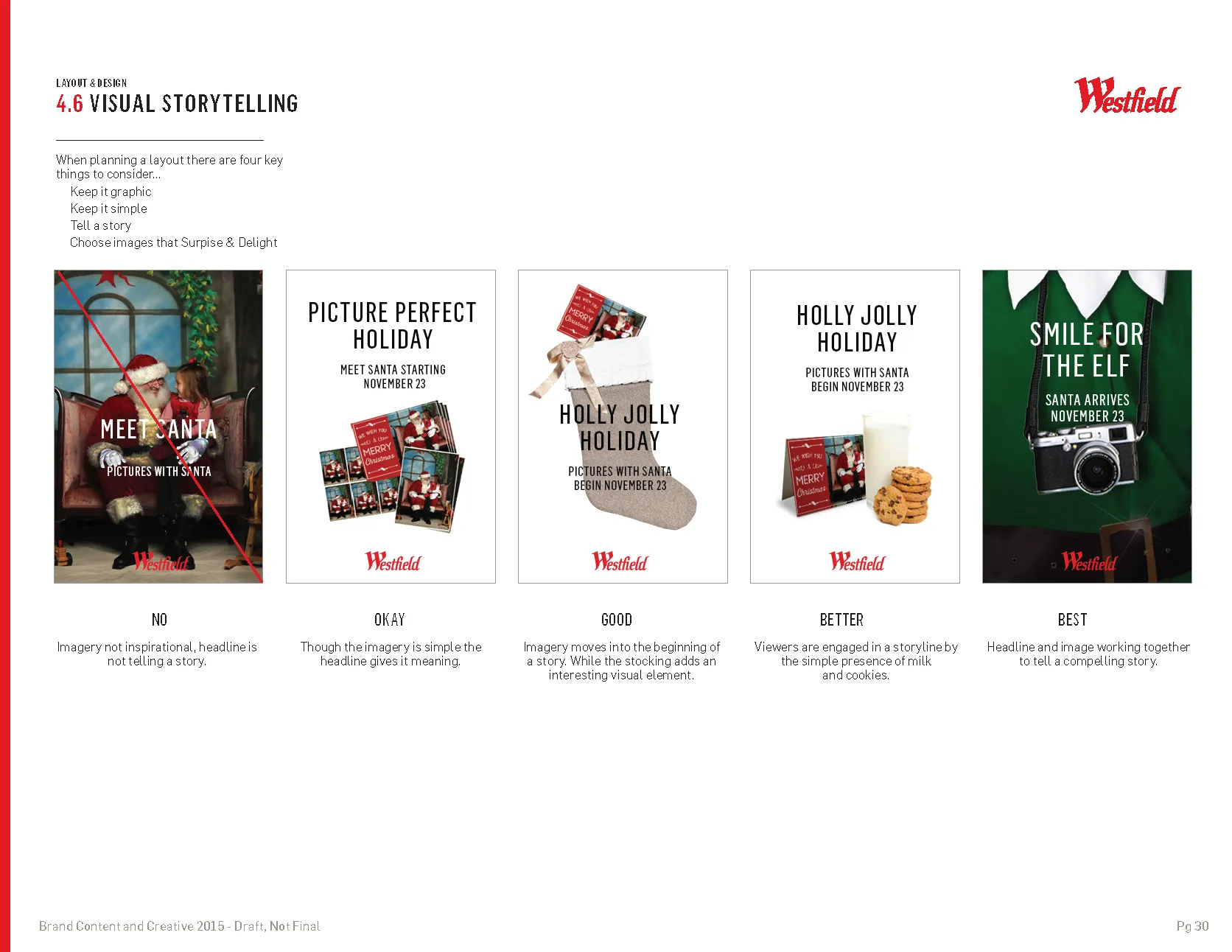
It also set a clear quality bar for the creative itself, with worked examples graded from weak to strong so that anyone producing a Westfield ad could see the difference between imagery that merely illustrates a headline and imagery that tells a story alongside it.

Westfield right place right message customer journey mapping across campaign touchpoints

Business Results

Growth: In 2016, Westfield grew 14% — in a category in strong decline, as consumers shifted online and department stores filed for bankruptcy.

Positioning: The brand moved from "The Joy of Shopping" to "Experience It First," recasting the mall as a destination for entertainment rather than transactions.

Scalability: The guidelines were built with clear instructions and open-ended templates, so a general manager at a small regional center could hire an inexpensive freelancer to promote a cat adoption event with the same panache Westfield San Francisco Centre brings to a celebrity-studded fundraising gala.

Westfield visual storytelling guidance grading campaign creative from weak to strong